
Good cleaning practices often boil down to basics. Scheduling your sweeper or floor scrubber runs stands out as a simple step that delivers big returns. By keeping your cleaning consistent and predictable, operators can move in long, straight lines to speed up the work and improve its quality.
Tight turns force scrubbers to leave water behind, and sudden stops to avoid boxes, pallets, or foot traffic slow everything down. They can even lead to puddles of dirty water that become slip hazards or violate safety standards in compliance-driven environments like food plants or healthcare facilities.
Here are our top tips to make your floor cleaning as efficient as possible:
Fix these issues by setting a fixed daily cleaning time. Make sure everyone in the facility knows the plan so operators can work uninterrupted. Even a quick 60-second reset by employees—picking up cords, removing pallet wrap, or scooting carts aside—creates open lanes that keep machines productive.
For sweeping, encourage workers at production stations or shipping tables to brush debris from equipment into the aisles. This ensures the sweeper captures dust, metal shavings, cardboard scraps, or food particles in one efficient pass.
These tips are especially helpful in:
Consistency keeps the whole facility cleaner with less effort. Plus, a solid schedule ensures you see the payoff from your investment. Floor scrubbers and sweepers come with steep costs for equipment, labor, and chemicals. Plan smart to make them count!
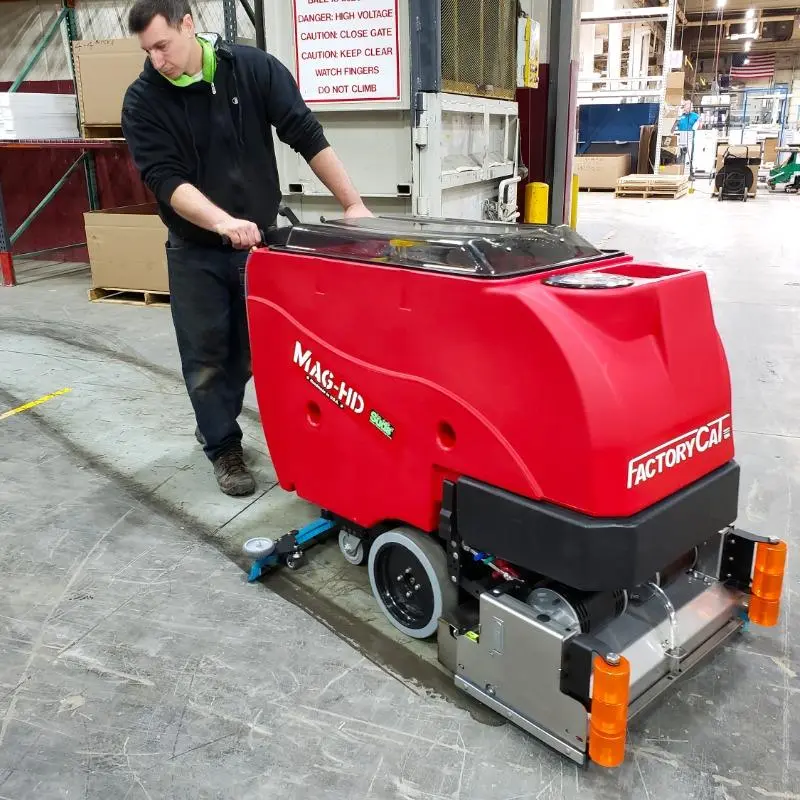
Always signal when cleaning starts. Set out cones, display digital alerts on facility screens, and notify forklift drivers so they can adjust their routes or reduce speed.
To further enhance safety when cleaning floors, consider the following:
A clear, communicated safety plan protects employees, operators, and equipment.
In long aisles or open spaces, tackle two aisles at once to reduce unnecessary turns, which is one of the biggest causes of streaking and leftover water. Drive down the right side of the first aisle, using the side broom and squeegee to hug the edge. At the end, swing left into the second aisle and clean its right edge. Then reverse direction to finish both aisles.
This approach:
Floor cleaning technique matters and small improvements can drastically boost results.
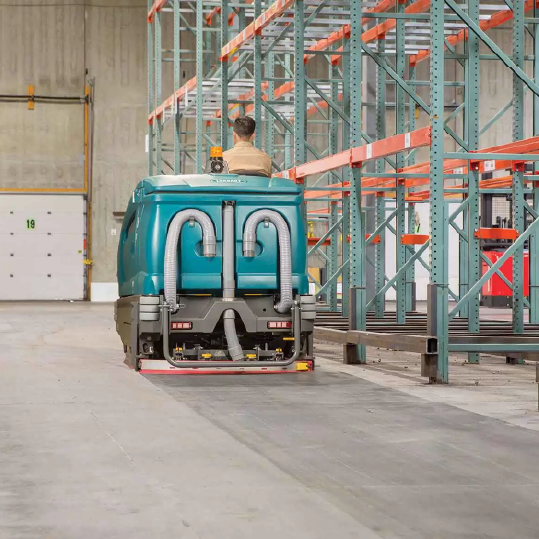
Invest time in scheduling, operator training, and a clear cleaning plan to stretch your equipment’s value. Many facility managers skip this step, resulting in frustrated operators, prematurely worn components, and inconsistent cleaning.
High operator turnover can make this even worse. New hires often receive little more than a quick walk-through on the machine. Build thorough machine training into every onboarding process, including teaching workers how to prep the area, operate the machine, empty recovery tanks, inspect squeegees, and perform end-of-shift maintenance.
Well-trained teams also help reduce:
Unsure how to begin? Reach out to us by phone or email. Our team brings decades of hands-on experience working with warehouses, distribution centers, manufacturing plants, food processors, retailers, schools, and more. We’d be glad to review your setup and suggest ways to make your operators more effective regardless of where you bought your machine.
Happy scrubbing!